
Hand & Maintenance Wash
Hand wash and maintenance wash services keep your car looking its best.
Pricing
A maintenance wash is the best-value habit in detailing. Pricing is straightforward and depends mainly on how big your vehicle is and how dirty it has gotten since the last clean.
Free estimate, no obligation
Send a photo of the damage and we will price it for you, usually same day.
What affects your price
- Vehicle size, from a sedan up to a lifted truck or large SUV
- How dirty the vehicle is and how long the grime has sat
- Whether the wheels and tires need heavier attention
- Any extra steps like bug or sap removal on the front clip
Pricing shown is an honest best estimate for the Modesto area, not a binding quote. Ceramic coating customers get 35% off Vanish maintenance washes while enrolled in Coating Care. Call or text the Riverbank shop and we will pencil you in. Send a photo along if you want a number first. The price is clear up front and the estimate is free.
A hand wash sounds simple, but how a car gets washed is the single biggest factor in whether its paint stays glossy or slowly fills with swirl marks over the years. A maintenance hand wash is the regular, gentle clean that keeps road film, bug splatter, bird droppings, and tree sap from etching into your finish between full details. We wash by hand, the right way, with the right soap and clean media, so your paint gets cleaner without picking up the spider-web scratches that drive-through tunnel washes leave behind. For most Modesto drivers it is the cheapest, most effective thing you can do to protect what your car already has, and it takes about a half hour at our Riverbank shop.
What a Maintenance Wash Actually Does
A hand and maintenance wash is the routine clean that lives in between your bigger services. It is not a full detail and it is not paint correction. Its job is to safely remove the everyday contamination that lands on your car: dust, road grime, brake dust on the wheels, bug guts on the front clip, hard-water spots, and the bird droppings and tree sap that the Central Valley throws at anything parked under a tree. Left alone, several of those are not just ugly, they are corrosive. Bird droppings and sap can etch a permanent mark into clear coat in a matter of days when the sun bakes them in.
The other half of the job is doing all of that without adding damage. Most of the fine scratching and swirling you see on a dark car under direct sun was not put there by a single accident. It was ground in slowly, one careless wash at a time, by dirty rags, spinning tunnel brushes, and wiping a dusty panel dry. A proper maintenance wash breaks that cycle. Done on a regular cadence, it keeps the paint not just clean but genuinely healthier, because the contaminants never sit long enough to bond or etch.
Think of it the way you think of brushing your teeth versus a dentist visit. The full detail is the deep clean a couple of times a year. The maintenance wash is the regular upkeep that makes the deep clean easier and less necessary. Skip it and grime compounds; stay on it and your paint keeps looking like it was just detailed for a fraction of the cost.
How We Hand Wash a Car
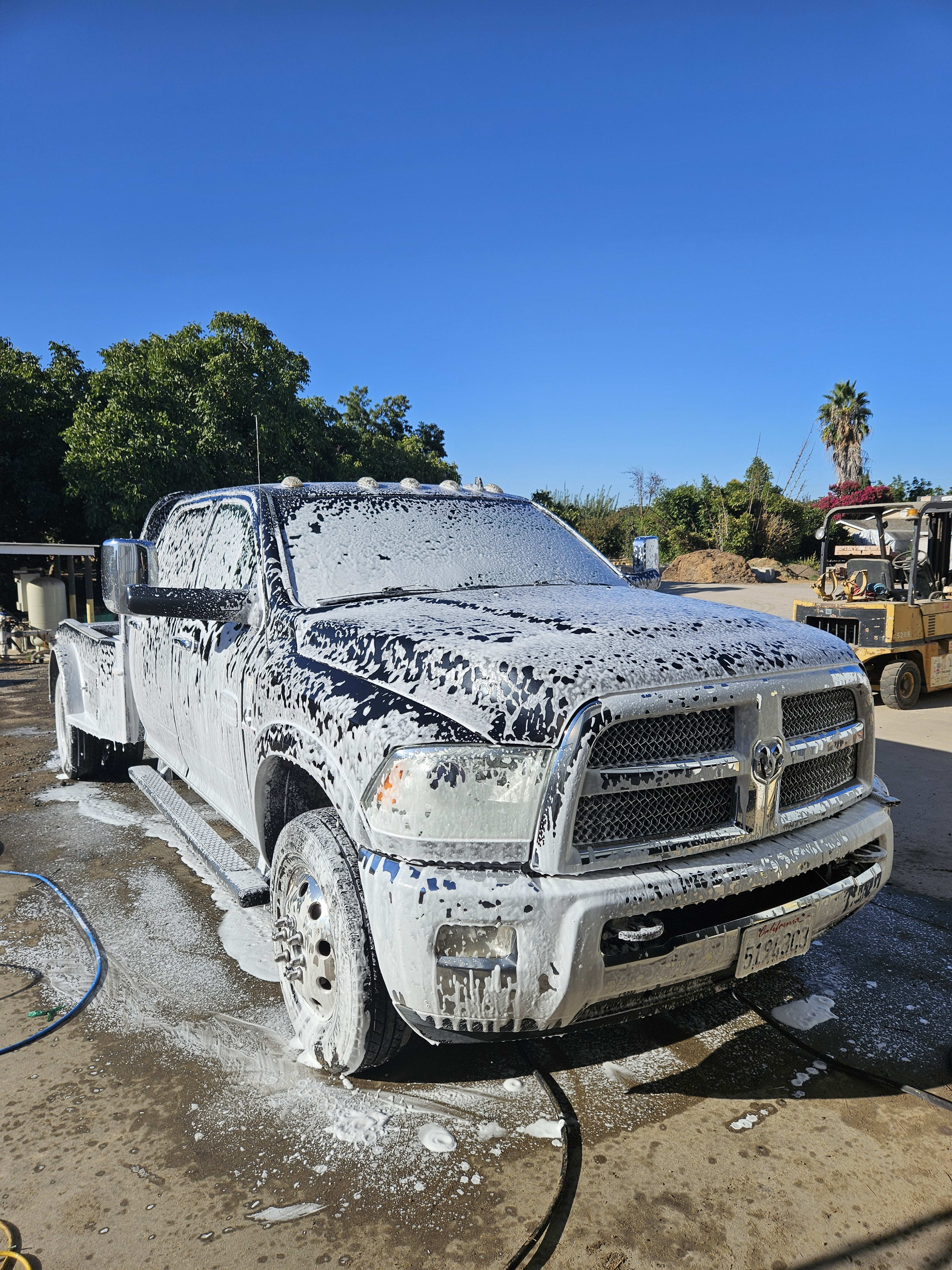
We start by knocking the loose grit off before a single mitt ever touches the paint. The car gets a thorough rinse, and on dirtier vehicles a pre-soak of foam that clings to the panels and lifts away road film while it dwells. That step matters more than people think, because the dirt that scratches paint is the dirt you drag across it while it is still dry or stuck on. Getting as much of it off contact-free first is what keeps the actual wash gentle.
Then we wash by hand using clean, soft media and a proper two-bucket method: one bucket of soapy wash solution and a separate rinse bucket with a grit guard, so the dirt you pull off the car goes to the bottom of the rinse bucket instead of back onto your paint. We work top down, since the lower body and rocker panels are always the filthiest, and we keep wheels and tires on their own dedicated tools so brake dust never crosses over to the body. The car is rinsed clean and dried with soft towels or filtered air rather than wiped down with whatever is handy, because the dry-off is one of the easiest places to put swirls in if you rush it.
We do all of this at our shop at 2809 Patterson Rd in Riverbank, where we have proper water, lighting, and shade to do it right. Good lighting matters: it is how we catch the spots that are still hanging on and how we make sure the finish is genuinely clean before you drive off, not just clean-looking in the parking lot glare. You bring the vehicle to us, and most maintenance washes are a quick wait-or-come-back service.
Why the Method Matters for Your Paint
The reason we are particular about technique is that paint damage from washing is cumulative and mostly invisible until it is not. Clear coat is thin, and every swirl is a tiny scratch that scatters light. One or two you will never notice. Thousands of them, ground in over years of tunnel washes and dry wiping, are exactly why a five-year-old black truck can look dull and hazy while a well-kept one still looks wet. The point of washing by hand is not luxury, it is avoiding that slow accumulation.
This is also why a careful maintenance wash protects the money you have already spent. If you have had paint correction or a ceramic coating done, the wrong wash habits will quietly undo it: harsh chemicals and tunnel brushes strip and abrade a coating faster than almost anything. A gentle, coating-safe wash is what lets a ceramic coating actually deliver the years of protection it is supposed to. That is exactly why our ceramic coating customers get a standing discount on maintenance washes for life, so keeping that coated finish flawless is easy and cheap.
Even on uncoated paint, staying on a wash routine pays off at resale. A finish that has been washed gently and kept free of etching and water spots simply photographs and inspects better, and buyers read a clean, swirl-free car as a cared-for car. The wash itself is small money; the difference it makes to how the vehicle reads after a few years is not.
Signs You Are Due for a Wash
The obvious signal is visible film: a dusty, hazy look on the paint and glass, water spotting from sprinklers or a passing rain, and the gritty feel of road grime on the lower panels. If your car has been parked under a tree, sap and bird droppings are the urgent ones, because those etch the longer they sit in the sun. If you can see them, it is already time, and the sooner the better before the Central Valley heat bakes them in.
There is also a timing answer, not just a visual one. For most daily drivers around Modesto, a maintenance wash every two to three weeks keeps paint comfortably ahead of buildup; cars that live outside, sit under trees, or rack up miles on dusty roads want it more often. If you have a ceramic coating, regular gentle washes are not optional upkeep, they are how you get the coating's full lifespan, so a steady cadence is the goal rather than waiting until it looks dirty.
A good candidate for this service is honestly almost any vehicle that is otherwise in decent shape and just needs to be kept that way, whether it is freshly detailed and you want to maintain it, recently coated, or simply a car you like keeping clean without risking the local tunnel wash. If the paint is heavily neglected, oxidized, covered in bonded contamination, or full of swirls you want removed, that is a different and bigger job, which we will tell you straight.
When a Wash Is Not the Right Fix
We will be honest about the limits, because a maintenance wash is a maintenance service, not a miracle. A wash cleans the surface; it does not correct it. If your paint already has swirl marks, fine scratches, oxidation, or etched-in water spots, washing will make the car clean but those defects will still be there afterward, because removing them takes machine polishing, which is paint correction, not washing. We would rather tell you that up front than have you pay for a wash expecting it to fix damage it cannot touch.
Likewise, if your paint is contaminated with bonded fallout, overspray, or rough industrial grime that you can feel through a sandwich bag over your hand, a wash alone will not get it smooth. That calls for a clay or decontamination step, often as part of a full detail or as prep before a coating. And of course, a wash does nothing for dents or chips: that is what our paintless dent repair and windshield chip repair are for, and we are glad to look at those at the same visit.
When the maintenance wash is not the right call, we will point you to the service that actually is, and give you a free, honest estimate either way. Kevin would rather send you home knowing exactly what your car needs than sell you a wash that leaves you disappointed. Most of the time, though, a regular hand wash is exactly the right, low-cost answer to keeping a car looking great.
Local to the Central Valley
Central Valley driving is hard on a finish. Daily miles on Highway 99 and McHenry Avenue coat the lower panels in road film and bug splatter, the relentless Modesto sun bakes bird droppings and tree sap into clear coat fast, and almost every car here lives outside collecting dust and sprinkler spots. A regular hand wash at our Riverbank shop is the simplest way to stay ahead of all of it and keep your paint looking detailed between full services, without trusting it to a brush-style tunnel wash.
Protects Your Finish
A gentle hand wash lifts contamination without grinding in the swirl marks that tunnel washes and dirty rags leave behind.
Stops Etching Early
Removing bird droppings, sap, and hard-water spots before the sun bakes them in keeps them from etching permanent marks into your clear coat.
Coating-Safe and Discounted
A coating-safe wash is how a ceramic finish reaches its full lifespan, and ceramic customers get 35% off Vanish maintenance washes while enrolled in Coating Care.
How Hand & Maintenance Wash Works
- 1
Pre-Rinse and Foam
We rinse the vehicle and, when it is dirty, lay down a clinging foam pre-soak to lift road film and loosen grit before anything touches the paint, so the dirt that scratches comes off contact-free first.
- 2
Two-Bucket Hand Wash
We hand wash with clean, soft media and a separate rinse bucket with a grit guard, working top down and keeping dedicated tools for the wheels so brake dust never crosses onto the body.
- 3
Rinse and Safe Dry
We rinse the soap fully and dry with soft towels or filtered air rather than wiping with whatever is handy, since a careless dry-off is one of the easiest ways to put swirls into paint.
- 4
Final Check
Under good shop lighting we look the finish over for any spots still hanging on and confirm the paint is genuinely clean and spot-free before you drive off, not just clean-looking in the parking lot.
More Auto Detailing Services
Frequently Asked Questions
Maintenance washes start around $85 and go up mainly with the size of the vehicle and how dirty it is. A clean sedan that is washed regularly is at the lower end; a large truck or SUV that has been sitting in road grime takes more time and product. Ceramic coating customers get 35% off Vanish maintenance washes while enrolled in Coating Care. We will always give you an honest price up front, and estimates are free.
Most maintenance washes take about a half hour, depending on the size and condition of your vehicle. It is usually a wait-or-come-back service, so you can hang out or run a quick errand and pick the car up clean. Heavily soiled vehicles or ones that need extra bug and sap removal can run a bit longer.
The big difference is what touches your paint. Automatic tunnel washes use spinning brushes and recycled water that drag grit across your finish, which is the main cause of the swirl marks you see on a dark car in the sun. We wash by hand with clean, soft media and a two-bucket method so dirt is rinsed away rather than rubbed back in, then dry safely. It costs a little more than a tunnel, but it cleans your car without slowly scratching it.
For most daily drivers around Modesto, every two to three weeks keeps paint comfortably ahead of buildup. Cars that live outside, park under trees, or run a lot of dusty miles benefit from more frequent washes. If you have a ceramic coating, regular gentle washes are how you get the coating's full lifespan, so a steady cadence is the goal rather than waiting until the car looks dirty.
No, and we will tell you that honestly. A wash cleans the surface but does not correct it. Swirl marks, fine scratches, oxidation, and etched-in water spots are removed by machine polishing, which is paint correction, not washing. If your paint has those defects and you want them gone, that is a separate service, and we are happy to look at it and give you a straight assessment.
No, we are a shop-based business. All washing and detailing is done at our shop at 2809 Patterson Rd in Riverbank, where we have proper water, lighting, and shade to do the job right. We are a short, easy drive from Modesto and the rest of the Central Valley. A wash is quick, so call or text ahead and we can usually fit you in soon.
What Our Customers Say
Rated 5.0 out of 5 across 175+ verified Google reviews.
Need hand & maintenance wash?
Call or text us a photo for a free, honest estimate. Most detailing appointments take a few hours, depending on the package and vehicle condition.